A proposed uranium mine in northern Saskatchewan has the support of several Indigenous communities as it enters the final stage of seeking federal approval.
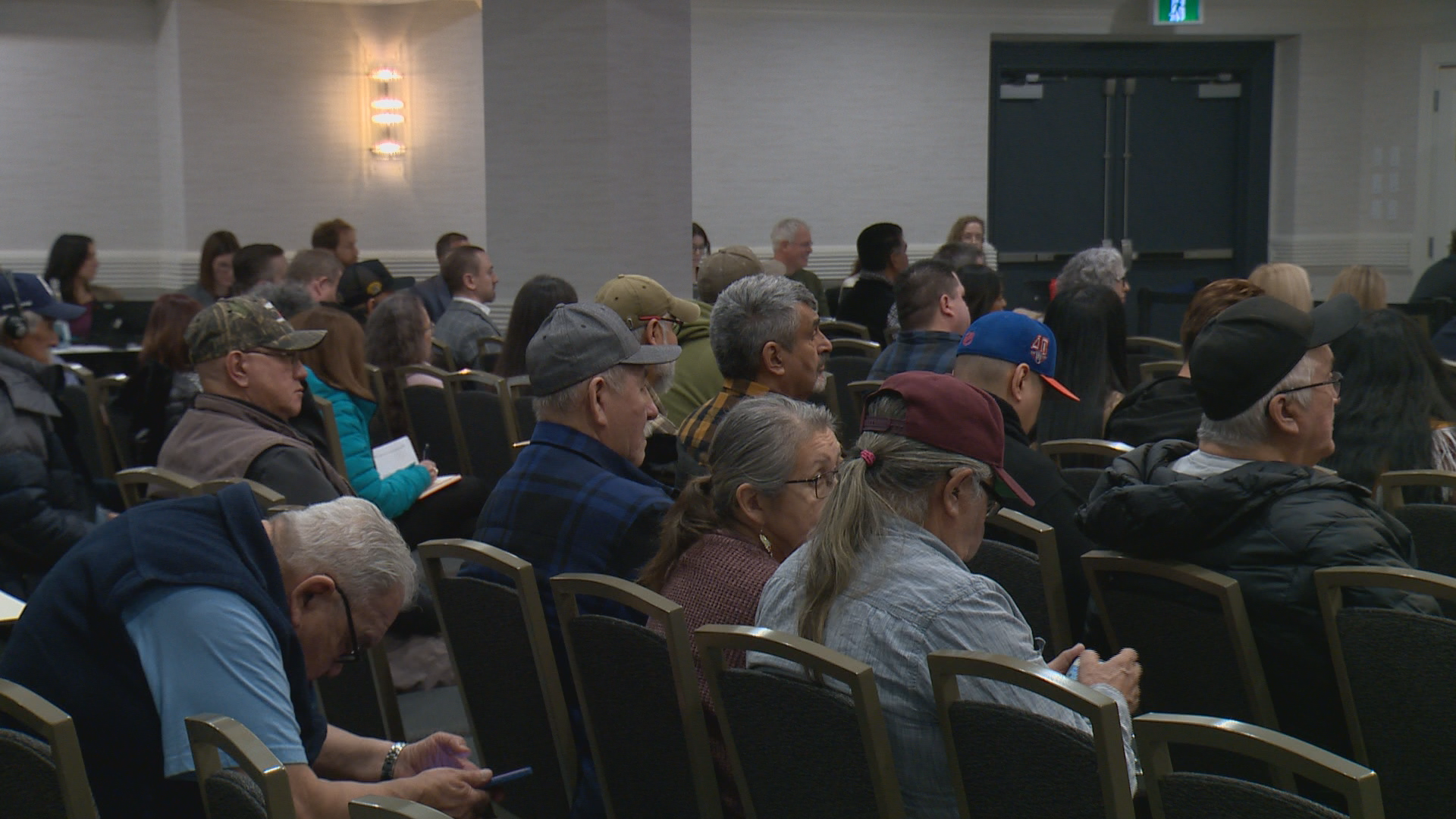
Canadian mining company NexGen Energy Ltd. presented its Rook I development project and heard from several key Indigenous stakeholders in Saskatoon on Monday, the first day of the second part of its hearing before the Canadian Nuclear Safety Commission (CNSC).
The proposed mine is located in the southwestern Athabasca Basin, around 150 km north of La Loche, Sask.
NexGen has identified four Indigenous nations in and around the proposed mine area that have signed impact benefit agreements with the company and offered their support for the project. These nations are the Clearwater River Dene Nation, a regional division of Métis Nation Saskatchewan, Birch Narrows Dene Nation and Buffalo River Dene Nation.
Dene Nation elder Jimmy Montgrand was in attendance at the hearings on Monday and says the mining projects are more than just extracting materials from the ground, but for “the future generation of Indigenous kids in that region.”
Montgrand supports the project, adding that ongoing collaboration between the company and the local Indigenous nations is crucial to success, especially given that the proposed mining site is home to historical sites.

Get daily National news
Get the day’s top news, political, economic, and current affairs headlines, delivered to your inbox once a day.
“We’re trying to maintain, according to the elders, what is beneficial for both the Indigenous groups of that region, as well as the corporations that are working with in that area,” said Montgrand.
Components of the mine include underground and surface facilities, along with an onsite mill that is expected to process an average of 1,400 tonnes of ore per day.
The project, which has been in the works for over a decade, is also expected to generate 1,400 local jobs, according to Leigh Curyer, NexGen’s chief executive officer.
“We share with the communities financially as well, and the agreements that we have show that the communities and the company are totally aligned with respect to the sharing of those financial benefits,” said Curyer.
Marlene Hansen, secretary for Métis Nation Saskatchewan, was a part of the consultation process for the past four years and praised the company for meeting the needs of the community.
“We talked about how they’re going to come back and make sure that everything is done and that we could go on the land, and it’s going to be protected. So we know it before it starts, and that’s a good thing,” said Hansen.
“Everybody’s just really excited to get it moving and looking forward to all of the jobs and all of the excitement to come with this project.”
Following the conclusion of the proceedings, the CNSC will consider community, safety and environmental impacts before deciding to grant the project a licence, which could take up to four months. A licence from the CNSC is required before the project can begin.
The proceedings before the CNSC are expected to continue in Saskatoon until its conclusion on Thursday.
© 2026 Global News, a division of Corus Entertainment Inc.