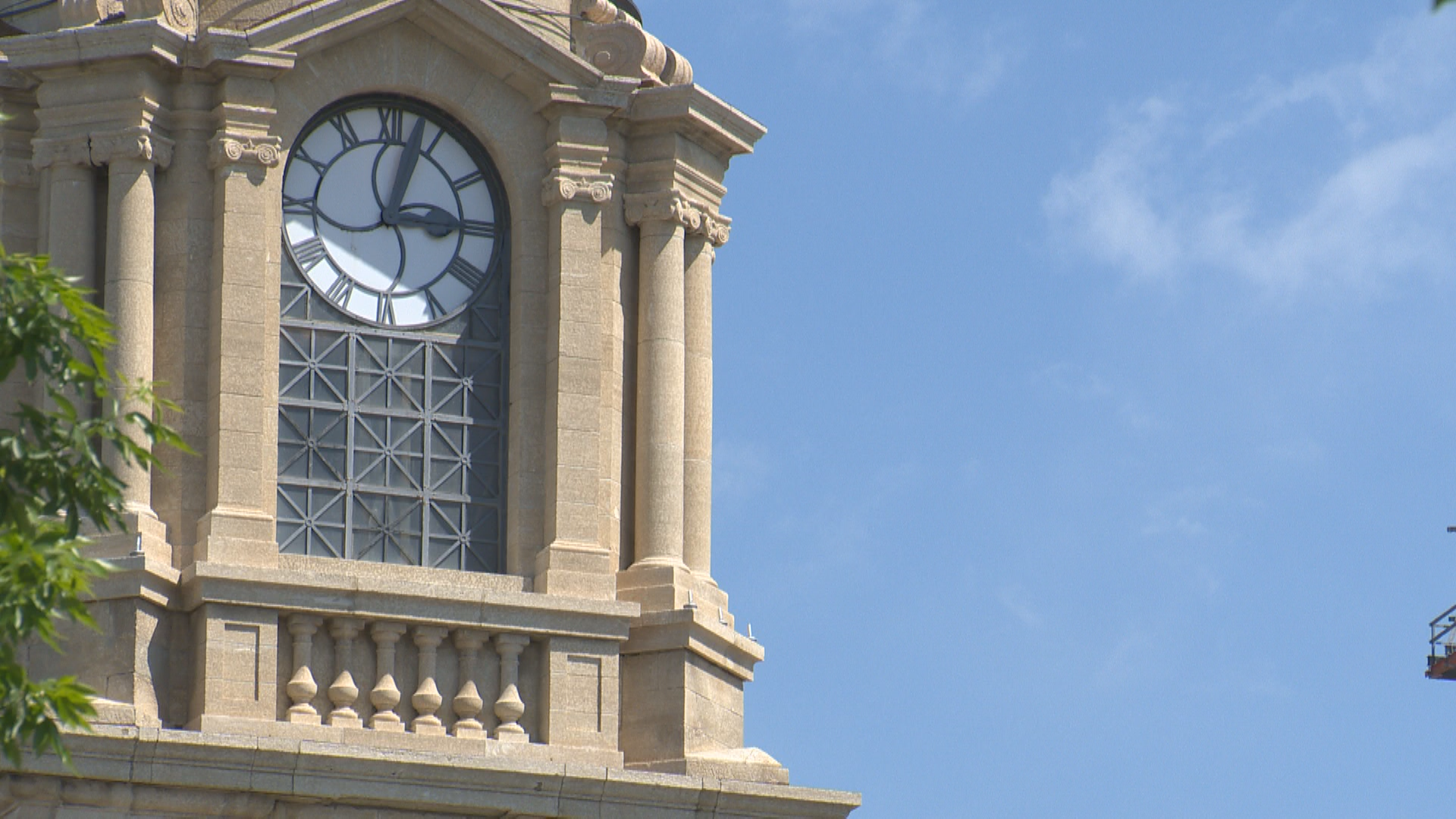
It appears that Alberta’s United Conservative Party government is expected to permanently make the switch to daylight saving time.
Government sources have confirmed to Global News that making the move permanent will be part of an omnibus bill that will be tabled in the Alberta Legislature later this week.
The confirmation comes after Premier Danielle Smith said in an interview with Postmedia that the move to daylight saving time this spring was the last time clocks in Alberta would be changed, meaning the clocks will not be falling back an hour in the fall, nor will they be moved ahead an hour next spring.
The legislation to make the move permanent would still need to be voted on in the Legislature, but judging by Smith’s comments to Postmedia, it appears that is just a formality.
Going forward, this means Alberta would be on the same time as Saskatchewan year-round. .
Alberta clocks would also be an hour later than British Columbia, where the switch to daylight saving time was already made permanent when B.C. residents moved their clocks forward an hour on March 8, 2026.
The move also comes five years after Albertans voted in a province-wide referendum, by the narrowest of margins — 50.2 per cent to 49.8 per cent — to reject the idea of moving permanently to daylight saving time.

Get daily National news
Get daily Canada news delivered to your inbox so you’ll never miss the day’s top stories.
However, following B.C.’s decision to make the switch permanent this spring, Premier Smith said her government would once again consider abandoning the practice of changing clocks twice per year.
The province traditionally “springs forward” on the second Sunday in March and “falls back” on the first Sunday in November.
However, according to the Pew Research Center, only about a third of the world’s countries follow daylight saving time. The vast majority of them are in Europe.
A survey by the provincial government in 1991 also showed that 91 per cent of surveyed Albertans were in favour of moving permanently to daylight saving time.
If the legislation passes and Alberta sticks to daylight saving time yar-round, the province would also be on the same time as Manitoba in winter and one hour behind Manitoba in summer.
However, that could change as Manitoba Premier Wab Kinew has recently mused about going on one clock year-round.
The change would mean much of Ontario and Quebec would be one hour ahead in winter and two hours ahead in summer.
Most of the Atlantic provinces would be two hours behind in winter and three hours back in the summer.
Alberta adopted daylight saving time in 1971 after a referendum on the subject passed with 61.5 per cent of voters in favour.
Since then, politicians across the spectrum have periodically petitioned for changes.
The former NDP government explored doing away with daylight time in 2017, but did not go ahead in part over concerns about the impact on airline schedules and starting times for NHL games.
With files from The Canadian Press.
© 2026 Global News, a division of Corus Entertainment Inc.