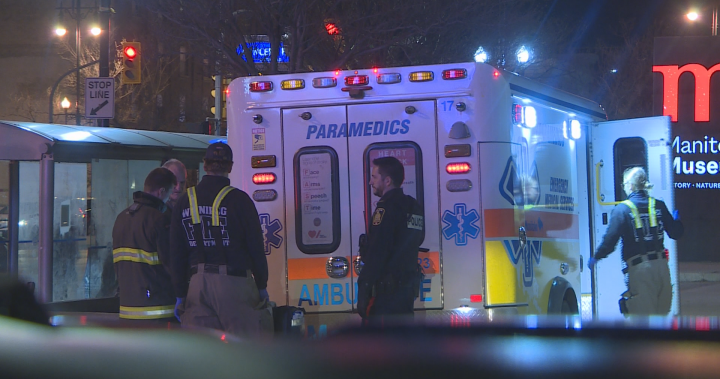
Recent data from the Winnipeg Fire Paramedic Service shows opioid-related call volumes are now surpassing alcohol-related calls for the first time.
The data shows that in 2024, there were 4,228 calls for alcohol and 3,091 for opioids. That trend was similar last year, which saw 4,684 calls for alcohol and 3,270 calls for opioids.
But the tables have turned in the first five months of this year. As of May 31, 2026, there were 1,989 calls for alcohol and 2,435 calls for opioids. It also notes that the data doesn’t account for calls where the chief complaint was listed as something like shortness of breath or unconsciousness, but substances were involved.
“It’s just not sustainable,” Tom Wallace, the deputy chief of support services and 911 communications with the Winnipeg Fire Paramedic Service, told Global News.

Get daily National news
Get daily Canada news delivered to your inbox so you’ll never miss the day’s top stories.
“We have crew members who are running to multiple calls throughout a shift, sometimes for the same individual.”
The data also shows that in all of 2025, WFPS members administered naloxone (Narcan) 4,900 times. So far this year, it’s already been administered 3,458 times.
“Doing the same type of call over and over and over again, and seemingly not making a difference in the overall system…. Our team has told us that that is quite frustrating for them,” Wallace said.
Manitoba Government and General Employees’ Union president Kyle Ross says the situation is leading to paramedic burnout.
“I’m hearing frustration, when you have 107 vacancies in the workforce and the stress it’s putting on the workers … It’s impactful on the worker,” Ross said.
“You show up to a call, it’s life and death. It’s an opioid overdose.”
Joseph Fourre, the founder of the Singing Red Bear Foundation, says hearing of the rising opioid numbers is disheartening.
“I feel terrible for the paramedics because we’re putting it on them to fill that void in keeping people alive,” Fourre said.
Fourre says there needs to be a different approach to how the drug crisis is being handled. He says treatment options need to be more accessible to those who need them most, adding he would like to see mobile rapid access to addictions medicine (RAAM) clinics and more accessibility to opioid replacement therapy.
“At the present time, people aren’t leaving the downtown area to go to a RAAM clinic,” Fourre said.
“I mean, it’s the first step towards recovery. If I can get suboxone on a daily basis and I don’t have to go running and waiting in line for hours for it, maybe I will start thinking about recovery and choosing differently on doing drugs.”
© 2026 Global News, a division of Corus Entertainment Inc.