


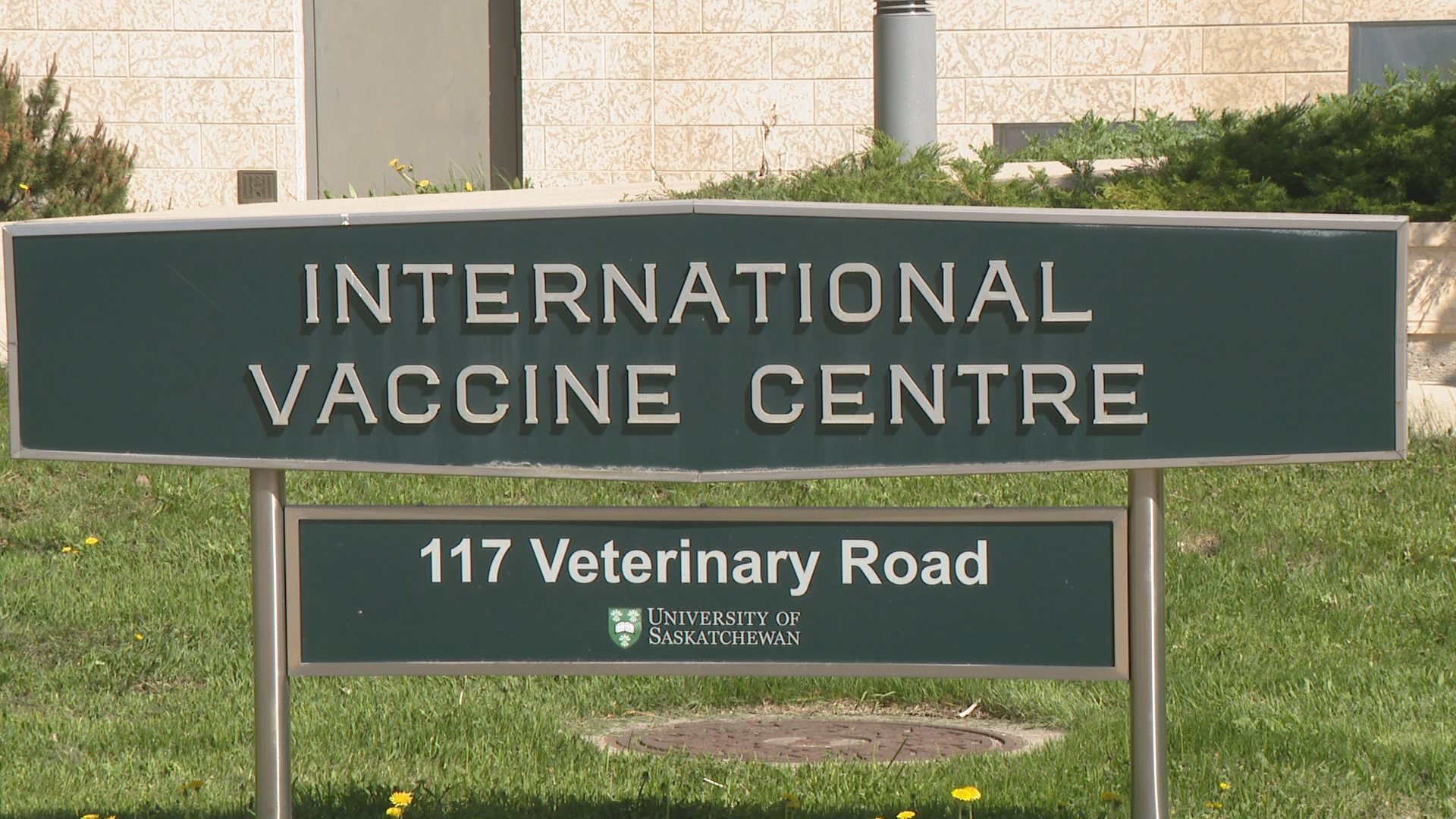
Researchers at the University of Saskatchewan’s Vaccine and Infectious Disease Organization (VIDO) say they are in the early stages of preclinical testing a hantavirus vaccine, with several years needed for rollout.
“Right now we’re in early pre-clinical trials, so going into animal experiments just to look at the immune response and to look at whether these can protect against infection and disease,” said Bryce Warner, principal scientist at VIDO.
A hantavirus outbreak on a luxury cruise ship earlier this month thrust the virus into the spotlight recently, after three people died after contracting the virus.
But researchers at VIDO have already been studying the virus and developing vaccines against New World hantaviruses, which include the two strains most commonly found in the Americas.
One of these two strains is the Andes virus, which spread among passengers on the MV Hondius and is commonly found in South America.
“It’s also one of the few viruses that we have good models to study in the lab. So it’s one that we need to work with to test our vaccines,” said Warner.


Get daily National news
Get daily Canada news delivered to your inbox so you’ll never miss the day’s top stories.
The other is the Sin Nombre virus, the strain commonly linked to cases of transmission from deer mice to humans in Canada and the U.S.
Currently, there is no cure or vaccine for hantavirus, though many efforts worldwide are underway to develop one.
VIDO is primarily developing a protein subunit vaccine but is exploring different methods for delivering it to patients, from arm injections to a liquid sprayed into the nose, which would address the site that the virus infects most commonly, said Warner.
“We’re looking into how we can administer the vaccine through an intranasal or mucosal delivery to really induce a good immune response within the lungs because that’s where the virus is going to come,” he said.
“So if you have sort of a strong immune response right at the point of entry of the virus, maybe you can prevent disease that way.”
While efforts continue in Saskatoon, fully rolling out the vaccine will take some time, said Warner.
“Going into people’s arms, we’re looking at probably 10-plus years,” he said, adding that there are many factors beyond the research that are involved in getting a vaccine ready for rollout, including approvals and funding.
As for next steps, Warner said researchers will be getting the vaccines into animals this summer and will continue to conduct field surveillance involving trapping deer mice outside and testing them to see the prevalence of the virus in Saskatchewan.
“We don’t know a lot about the differences in the viruses across Canada, so we’re trying to get some insight into that,” he said.
On Monday, the Spanish government confirmed a new case of hantavirus connected to the MV Hondius. The patient is one of 14 Spanish nationals aboard the ship and the second Spaniard to test positive for the virus.
© 2026 Global News, a division of Corus Entertainment Inc.