


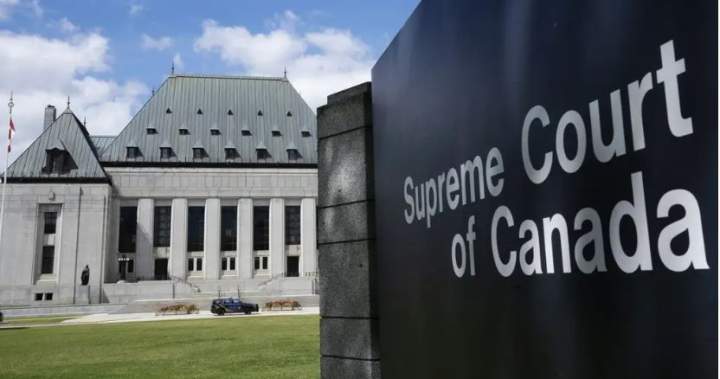
The Supreme Court of Canada on Friday largely upheld Quebec’s Bill 21, the secularism law that bars some public servants from wearing religious symbols at work — a historic ruling that confirms provinces can invoke the notwithstanding clause in advance to shield provincial laws from Charter challenges.
The court upheld most of Bill 21, except for a provision that bans members of the legislature from wearing religious symbols.
The historic decision could be “one of the most significant rulings on rights and freedoms in recent years,” said University of Ottawa law professor Natasha Bakht.
“Its ruling will also have consequences beyond Quebec, particularly for how the notwithstanding clause can be used across Canada,” she said.
Bill 21, passed in 2019, prohibits public servants, such as teachers and police officers, from wearing symbols like hijabs, turbans, yarmulkes, crucifixes, and kirpans.
At issue was Section 33 of the Canadian Charter of Rights and Freedoms, also known as the notwithstanding clause, which allows Parliament and provincial legislatures to override Charter rights for five years and renew the law.


Get daily National news
Get daily Canada news delivered to your inbox so you’ll never miss the day’s top stories.
Since Bill 21 passed in 2019, Quebec, Ontario, Saskatchewan and Alberta have invoked the same section of the Constitution to shield some other laws from legal challenges.
For example, Alberta invoked the clause to amend three laws that establish rules for students changing their names or pronouns in school, ban transgender girls from participating in amateur female sports, and limit gender-affirming health care.
Similarly, Saskatchewan used the clause to prevent children under 16 from changing their names or pronouns at school without parental consent.
Both Ontario and Alberta have used the clause to issue back-to-work orders, Ontario to end a strike by education workers in 2022 and Alberta to end a 2025 teachers’ strike.
The Canadian Civil Liberties Association, National Council of Canadian Muslims and activist Ichrak Nourel Hak took the Quebec government to court over the law on the grounds that the law is “inconsistent with the architecture of Canada’s Constitution and infringes Charter protections — including minority language rights and democratic rights.”
The counsel for the appellants argued that the law should “not be shielded by Quebec’s use of the notwithstanding clause.”
Critics of the notwithstanding clause argue that it is a “backdoor” to circumvent the Constitution and water down Charter rights.
Bill 21 harms immigrant and racialized communities in particular, the CCLA argued.
The law is an “egregious rights violation (that) unfairly targets people who express their faith through what they wear,” they said.
In 2021, the Quebec Superior Court largely upheld the bill but barred it from being used against members of the Quebec legislature.
According to NCCM, nearly three-quarters (73 percent) of Muslim women in Quebec have considered leaving the province due to the bill.
At a news conference in Quebec City on Thursday, Quebec Premier Paul St-Pierre Plamondon said the notwithstanding clause is an essential, democratically accepted tool for legislators.
He added that “if the Supreme Court goes forward to centralize power even more and puts provinces in a situation where they cannot have their own say,” the reaction from premiers will be “very heated.”
–with files from Canadian Press
© 2026 Global News, a division of Corus Entertainment Inc.